
Home / Blog / How Our Wholesale Knives Are Made: From the Forge to Your Shelf
How Our Wholesale Knives Are Made: From the Forge to Your Shelf
Wholesale knives · Blogs · 2024-08-12
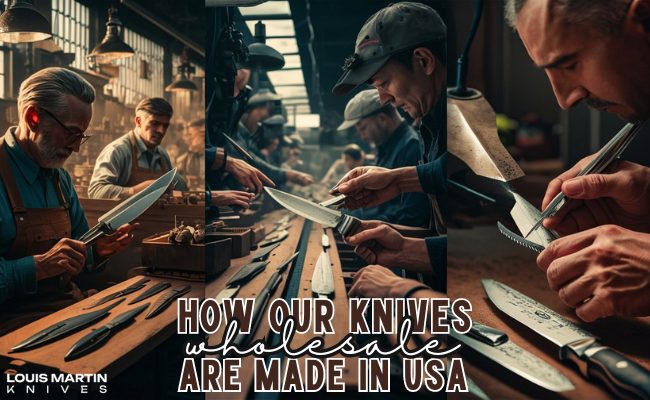
Every Louis Martin wholesale knife comes off our own bench. We are the manufacturer, not a distributor, so the knife a dealer puts in the case is the same one we forged, heat-treated, ground and inspected. Here is how a blade goes from bar stock to a wholesale knife lot on your shelf, and why each step matters when you sell it.
1. Choosing the steel
We work in three steels, each picked for a reason a customer can feel:
- Damascus: pattern-welded from 1095 and 15N20 high-carbon steels, forged and folded, then etched so the layers show. The pattern is why Damascus sells, and because it is forged by hand no two blades match.
- D2 tool steel: a harder, semi-stainless working steel. It is the low-maintenance pick for hunters in wet country and for buyers who want an edge over figure.
- High-carbon steel: tough, easy to sharpen and honest, used on working blades, choppers and knife blanks.
2. Forging
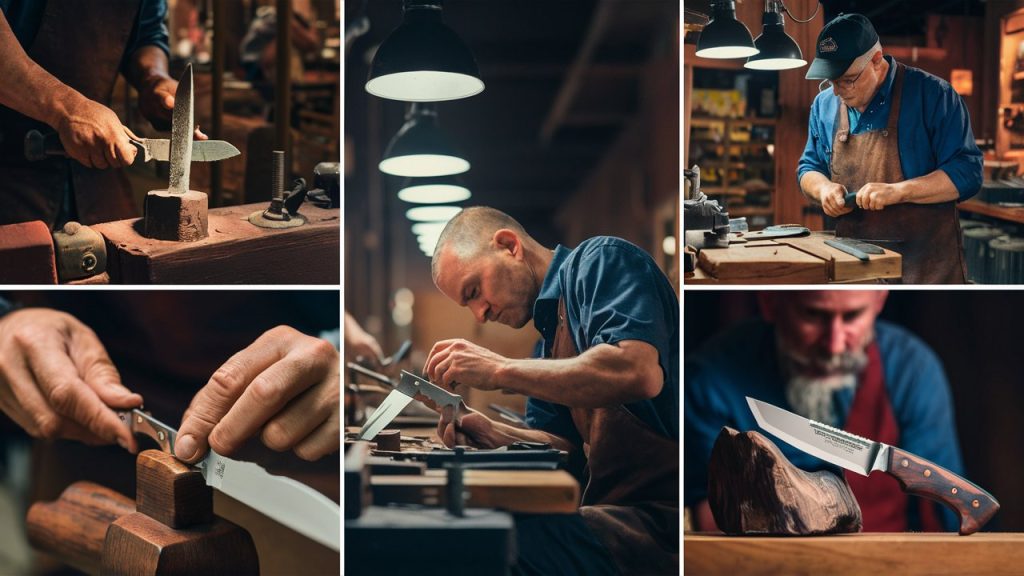
Every blade is hand-forged at our own facility. Heat and hammer set the rough profile, whether that is a drop-point hunter, a clip-point Bowie, a chef blade or a skinner with the belly a hunter needs. Because each one is shaped by hand, a lot of ten is ten individual knives, which is exactly what keeps a display case from looking like a peg wall of identical stock.
3. Heat treatment
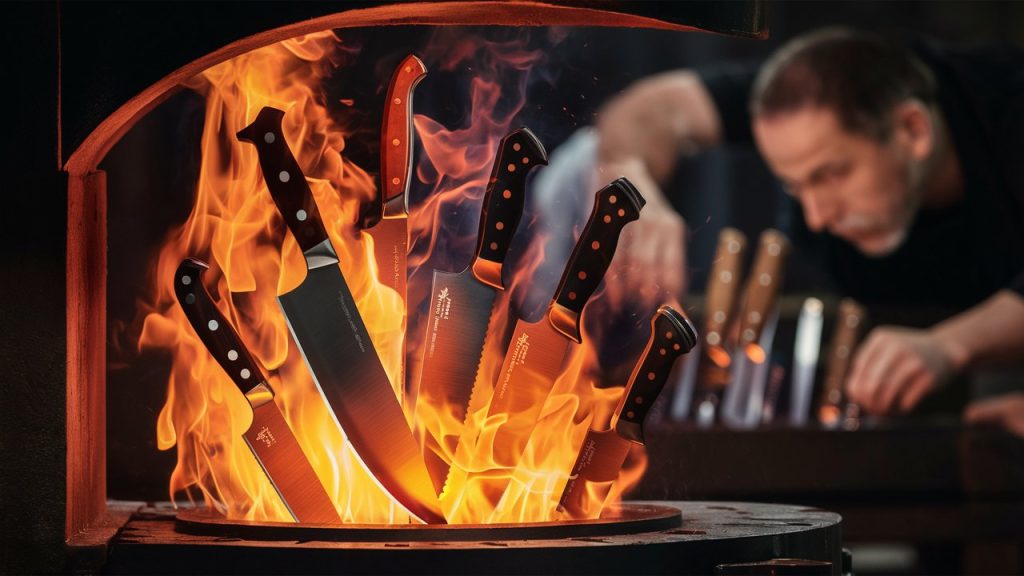
Every blade is heat-treated to a working hardness and tempered so it holds an edge without chipping. This is the step that separates a knife that gets used from a wall-hanger, and it is why we tell dealers our hunters, choppers and kitchen blades are ground for real work. Knife blanks get the same treatment, so a maker can handle and finish them without sending them out for heat treat.
4. Grinding and sharpening
After heat treat the blade is ground to its final geometry: thin behind the edge on kitchen knives so they actually cut, heavier through the spine on Bowies, trackers and choppers so they take impact. Damascus blades are then etched to bring up the pattern, and every knife ships sharp.
5. Handles and fit
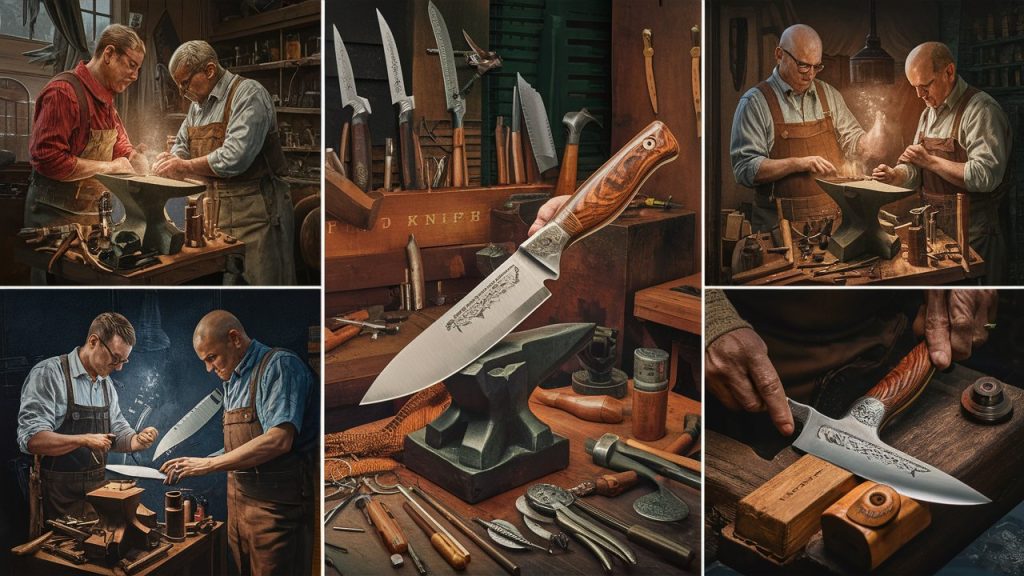
Handles are fitted by hand to each blade, in the materials dealers ask for: walnut and other hardwoods, olive wood, camel bone, ram's and bull horn, stag antler and Micarta, set over brass or nickel-silver bolsters and guards where the pattern calls for them. Dealers can ask their rep to weight a lot toward the handles their customers respond to, or to spread the mix so no two pieces in the case look alike.
6. Inspection
Before a knife leaves the shop it is checked for edge, fit and finish. Hunting knives, skinners and the big blades ship with a hand-stitched leather sheath where the pattern calls for one.
7. From our catalog to your case
Finished pieces go into the live wholesale catalog, where approved dealers see exactly what is in stock, one of a kind, with photos and specs. Orders start at 10 pieces, mixed across categories if you like. Pricing is set with your rep per order, not by fixed percentage tiers, and you pay on invoice after we confirm availability. Orders ship from New York.
What this means for a dealer
A hand-forged, one-of-a-kind knife gives you something a stamped production knife cannot: a real story at the counter and a price that story supports. If that is the stock you want, apply for a dealer account and browse the live catalog, or read why buying knives in bulk pays off.


